PortalRunner
Full-stack LLM-powered training and nutrition plan generator
PortalRunner is a web application I built to help runners create personalized training and nutrition plans based on their goals and preferences. Instead of following generic programs, users can generate structured plans tailored to their race targets, fitness level, and lifestyle.
Website: https://portalrunner.vercel.app
Functionalities
🏃 Training Plans
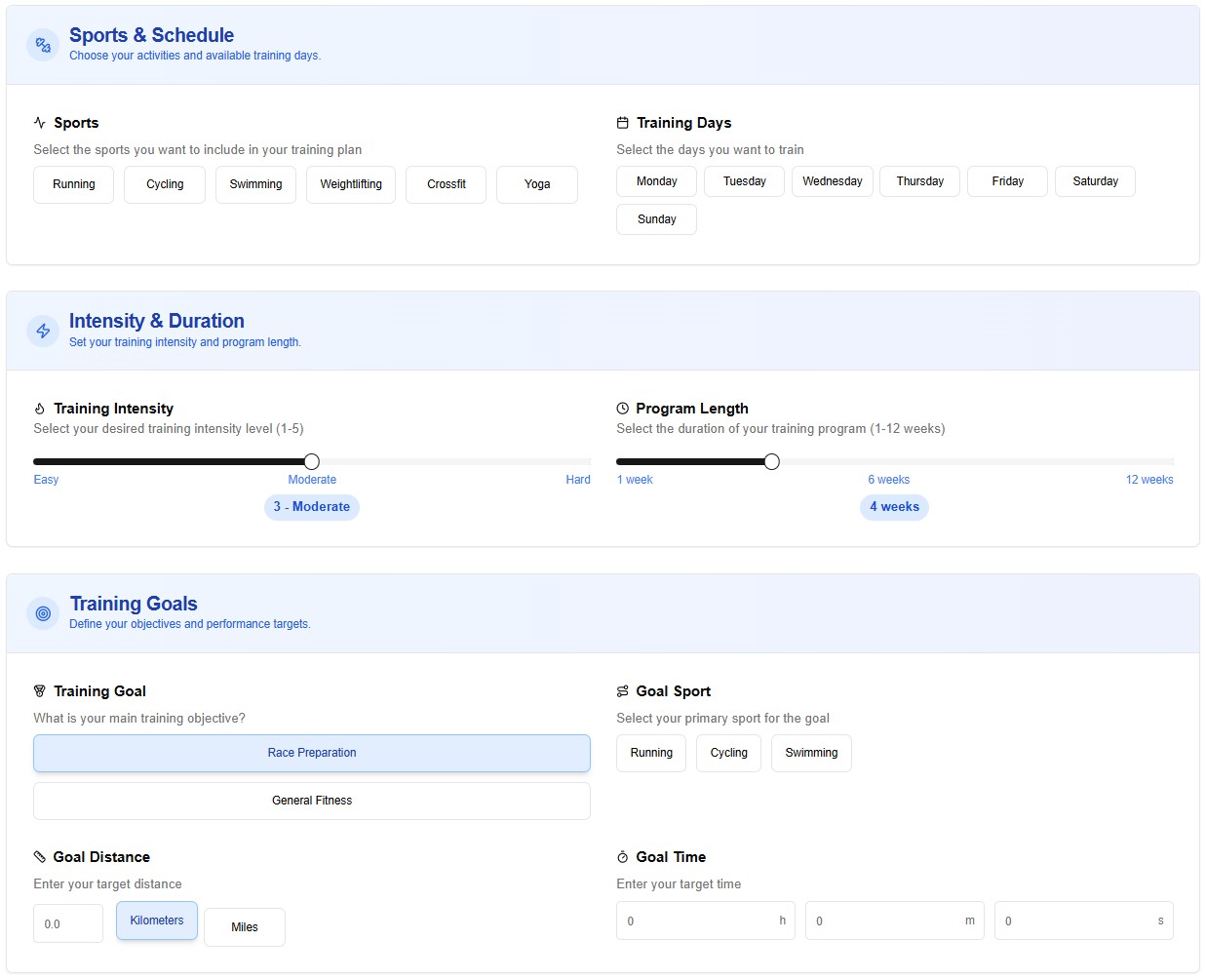
Users can generate training plans to reach a target race time or improve overall fitness. Each plan can be customized by defining:
- Training days
- Intensity
- Type of sport (running, cycling, swimming, etc.)
- Number of weeks
🥗 Nutrition Plans
Users can set a goal to gain, lose, or maintain weight. Each plan can be customized by defining:
- Choose number of meals per day
- Specify training intensity
- Select favorite foods
- Exclude foods to avoid
🔄 Strava Integration (In Progress)
I am currently integrating the Strava API to import, filter and label activities based on various criteria.
Technical Stack
Backend — FastAPI
The backend is built with FastAPI. Key aspects I worked on:
- REST API design
- JWT authentication (expiring encoded tokens with user data)
- Protected endpoints using dependency injection (
Depends) - Secure password hashing
- A
/meendpoint to verify active sessions
This improved my understanding of authentication flows and backend security best practices.
Frontend — Next.js
The frontend is built from scratch using Next.js (React-based). Main features I explored:
- Layouts and navigation
- Multi-language support (i18n)
- Redirection to backend via
vercel.json
It was my first complete frontend project and a great way to understand how a decoupled frontend communicates with an API.
Deployment
Frontend and backend are deployed separately:
- Backend → Render
- Frontend → Vercel
- Database (PostgreSQL) → Supabase
All services connect directly to GitHub for easy deployment.
The only limitations are Render’s and Supabase’s free tier: after inactivity, the backend “sleeps,” and the first request may take up to a minute. For an experimental project, this is acceptable and can be upgraded later.